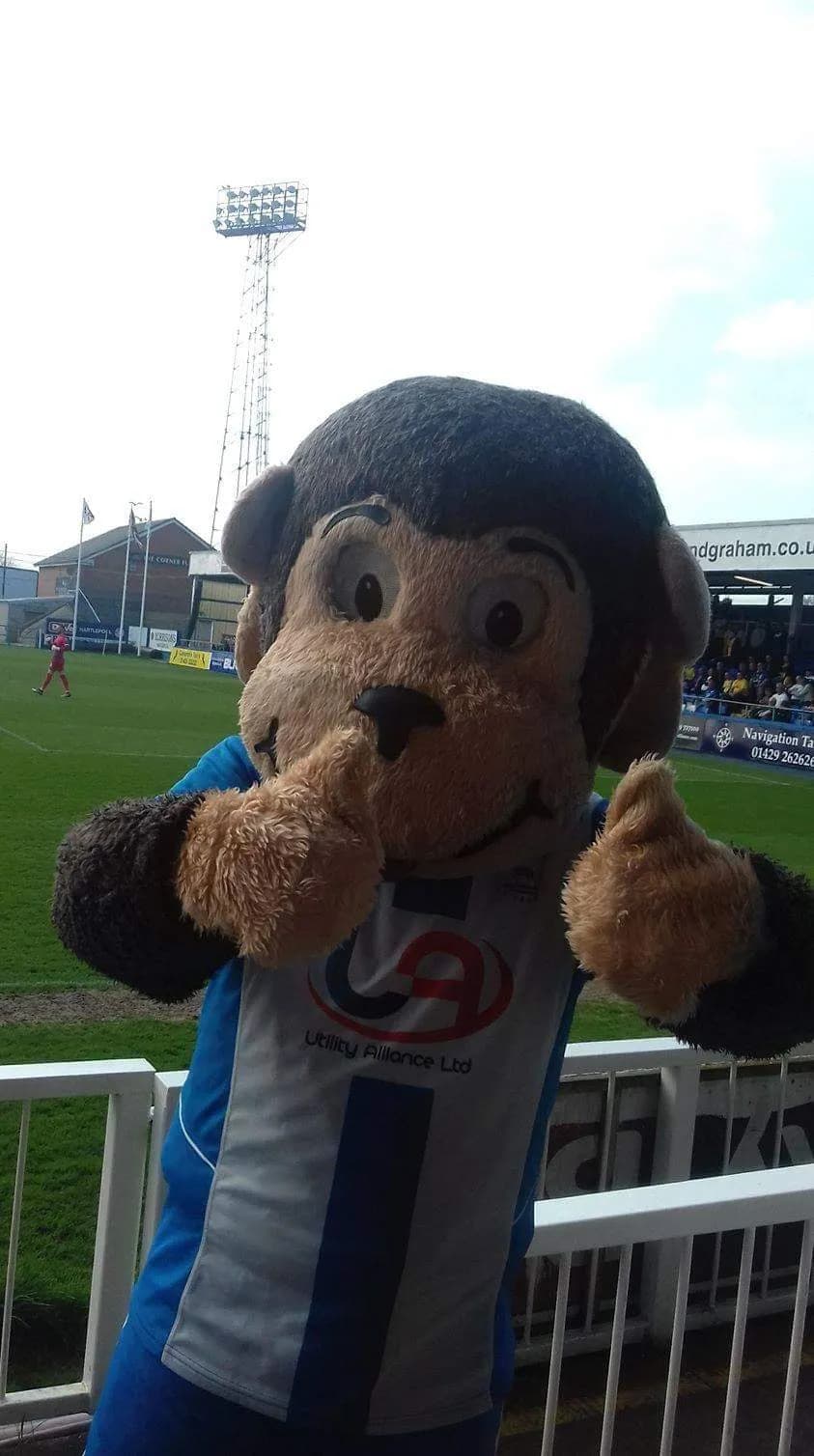
In 2002, Hartlepool made international headlines when voters elected a man who had spent years cavorting on football terraces in a monkey costume. Stuart Drummond, the former H'Angus the Monkey mascot of Hartlepool United F.C., became the town's first directly elected mayor. What began as a publicity stunt funded by the football club's chairman transformed into an 11-year political career.
The Monkey Behind the Mask
H'Angus the Monkey debuted on 31 October 1999 during Hartlepool United's FA Cup first round victory over Millwall. The mascot's name is a pun combining "hang" with "Angus," derived from Hartlepool's centuries-old "monkey hanger" legend. According to folklore, locals hanged a monkey during the Napoleonic wars after mistaking it for a French spy.
Stuart Drummond, born on 29 November 1973, was the second person to portray the mascot. He had spent his early career on cruise ships before returning to Hartlepool to work in a call centre. As H'Angus, Drummond became known for exuberant antics: he was once ejected from a match at Scunthorpe for leading fans in song, escorted off by police at a Blackpool play-off match (with an officer claiming the mascot had been "drunk"), and memorably punched the head off Rochdale's Desmond the Dragon during a mock fight.
From Touchline to Town Hall
Hartlepool United F.C. chairman Ken Hodcroft saw an opportunity in the town's new directly elected mayor system. He paid Drummond's £500 election deposit, treating the campaign as a publicity stunt. Drummond, who had briefly considered standing for Parliament in the 2001 general election, entered the race as an independent.
His campaign promise was deliberately absurd: free bananas for schoolchildren. Yet something about the mascot's anti-establishment appeal resonated with voters tired of traditional party politics. Odds tumbled from 100-1 to 4-1 as support grew.
On 2 May 2002, Drummond won with 5,696 votes, defeating Labour candidate Leo Gillen by 522 votes. The result made international news; Canada's National Post ran the headline "Monkey wins mayoralty, regains human form."
Three Terms and a Proposal
Drummond's tenure, from 6 May 2002 to 2 May 2013, proved surprisingly enduring. He won re-election in 2005 with 16,912 votes, a majority of more than 10,000. That election night, he proposed to girlfriend Rebecca Buttery, who accepted. The couple married in 2006 and had three children.
In 2009, Drummond secured a historic third term, becoming the first elected mayor in Britain to achieve this. He won by 844 votes against independent candidate Ian Cameron. In 2010, he was a finalist for the World Mayor prize.
True to his word, Drummond delivered on his free bananas promise. Operating without party backing throughout his career, he served as an independent mayor, consulting with local businesses and maintaining his connection to the town.
The End of an Era
By 2012, a campaign to abolish the directly elected mayor system gathered momentum. Labour seized on rules permitting a referendum after a 10-year moratorium. On 15 November 2012, Hartlepool voted 7,366 to 5,177 to return to a leader and cabinet system. The mayor post was abolished when Drummond's term ended in May 2013.
Drummond remained in Hartlepool as a consultant, keeping his hand in local affairs. In October 2021, he revealed that he and his family would emigrate to Australia in 2022, which they successfully did.
Legacy
The story of Stuart Drummond encapsulates a particular Hartlepool spirit: self-aware humour, defiance of outsiders' expectations, and an embrace of local identity. The "monkey hanger" legend, once potentially embarrassing, became a badge of civic pride through H'Angus and the man behind the mask.
Drummond's election reflected broader public disillusionment with party politics, while his three-term success demonstrated that voters valued results over appearances. From ejection at Scunthorpe to running Hartlepool Borough Council, Stuart Drummond proved that a town's mascot could become its mayor, and that Hartlepool residents would rather be represented by someone they knew than someone they were told to trust.