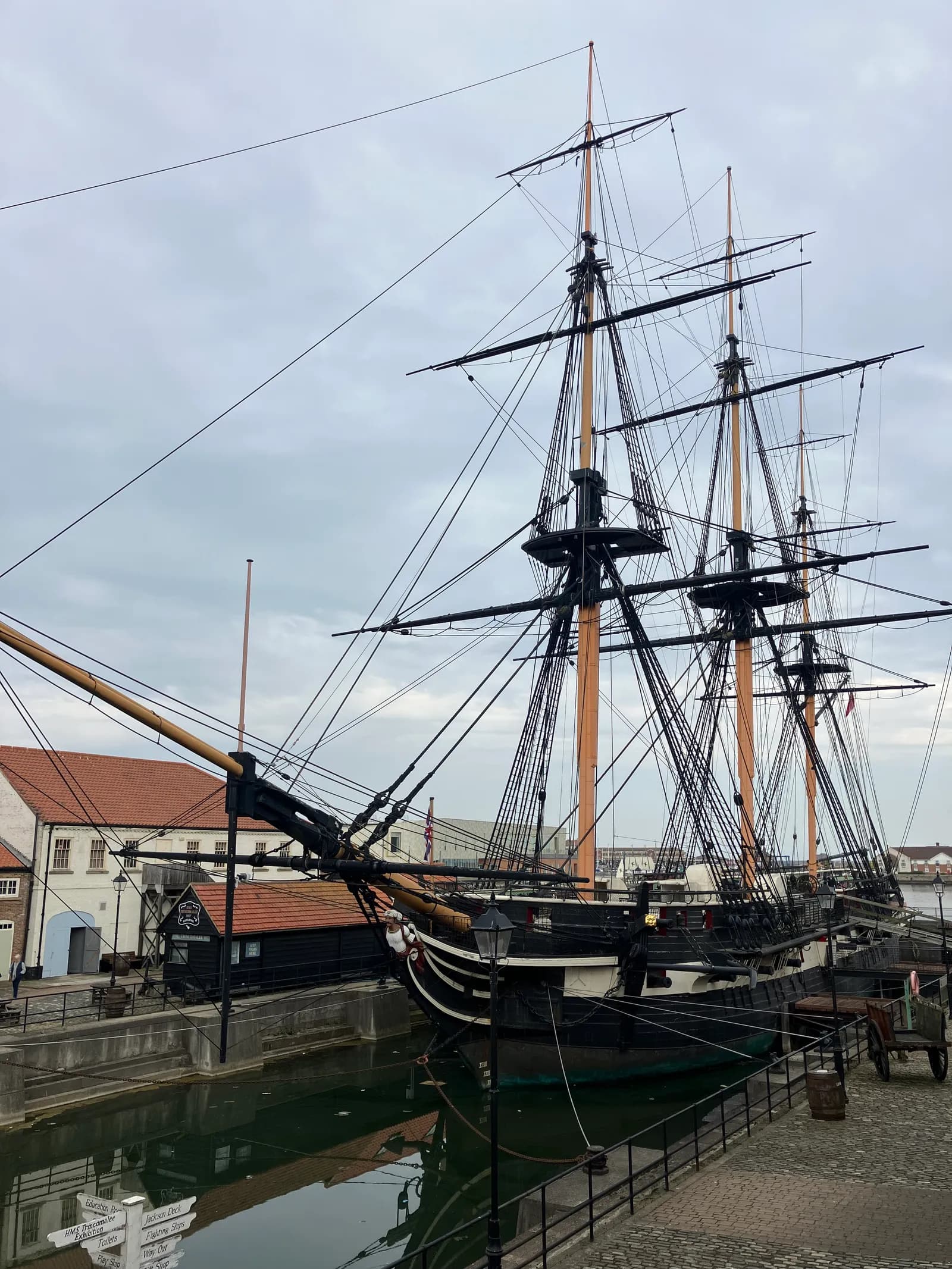
HMS Trincomalee holds a unique place in British maritime history as the oldest warship still afloat. Built in India in 1817, the vessel has called Hartlepool home since 1987 and serves as the centrepiece of the National Museum of the Royal Navy.
From Bombay to England
The Royal Navy ordered HMS Trincomalee on 30 October 1812 during the Napoleonic Wars, when British oak supplies had been depleted by decades of shipbuilding. The Admiralty turned to the Wadia Shipyards in Bombay, where master shipbuilder Jamsetjee Bomanjee Wadia laid the keel on 25 April 1816.
Constructed from durable Malabar teak at a cost of £23,000, the 46-gun Leda-class frigate was launched on 12 October 1817. She was named after the 1782 Battle of Trincomalee in Ceylon (modern Sri Lanka). The vessel measured 150 feet on the gundeck and carried a complement of 315 officers and men.
After fitting out with temporary masts for the voyage, HMS Trincomalee departed India under escort from HMS Fowey. The ship stopped at St Helena on 24 January 1819, where surgeon John Stokoe, who had attended Napoleon at Longwood House, came aboard as a passenger. She arrived at Portsmouth on 30 April 1819, completing a journey that cost an additional £6,600.
Naval Service Across Three Continents
HMS Trincomalee spent her first 26 years in reserve at Portsmouth. In 1845, she was re-armed and reclassified as a sixth-rate spar-decked corvette for active service. From 1847 to 1857, the ship patrolled the North America and West Indies Station, participating in anti-slavery operations and helping to quell riots in Haiti. She also served on the Pacific Squadron until returning to Chatham in September 1857.
First Hartlepool Connection
The ship's connection to Hartlepool began in 1862, when she was moved to West Hartlepool to serve as a drill ship for Naval Volunteers. At that time, West Hartlepool was the third largest port in Britain. Moored in Union Dock, the vessel trained boys aged 15 to 16 who had signed for ten years of service from age 18. The gunports were modified multiple times to accommodate training armaments.
In 1897, the ship was sold for scrap but rescued by entrepreneur Geoffry Wheatly Cobb, who restored her and renamed her Foudroyant in honour of another vessel wrecked that year. She served variously as an accommodation ship, training vessel and holiday ship, remaining in service until 1986.
Return to Hartlepool and Restoration
In July 1987, HMS Trincomalee was transported to Hartlepool by chartered barge. The Foudroyant Trust selected the town because of the successful restoration of HMS Warrior at Portsmouth. Restoration work began on 1 January 1990, with 48 people recruited by the trust.
The project was substantial. Workers removed 80 tons of iron ballast and training ship additions, then constructed a steel frame around the hull. Of the original 140 frames, only four remained; the rest were replaced with Opepe wood, which shares similar properties to Malabar teak. The restoration used replica steel masts indistinguishable from the originals, and lifts were installed between decks for wheelchair access.
The ship is approximately 65 per cent original, a remarkably high proportion attributable to teak's durability compared with oak vessels, which typically required complete rebuilds. HRH The Duke of Edinburgh became patron of the renamed HMS Trincomalee Trust in 1992, and the restoration was completed in 2001.
Hartlepool's Maritime Heritage Attraction
HMS Trincomalee opened to the public in July 1994 as part of Hartlepool Historic Quay, a recreation of an 18th-century seaport built by Teesside Development Corporation to regenerate the area following industrial decline. The attraction later became Hartlepool's Maritime Experience and, in June 2016, joined the National Museum of the Royal Navy.
Today, the ship sits at Jackson Dock within Hartlepool Marina, which Queen Elizabeth II opened in 1993. Visitors can tour the vessel at set times, with the gun deck accessible via ramp. The museum complex includes the PS Wingfield Castle, built in 1934 and now serving as a floating exhibit and café, plus the Museum of Hartlepool with free entry.
A Vessel of National Significance
HMS Trincomalee is listed as part of the National Historic Fleet alongside HMS Victory, HMS Caroline and HMS Alliance. She remains the oldest British warship still afloat; although HMS Victory is 52 years older, she rests in dry dock at Portsmouth.
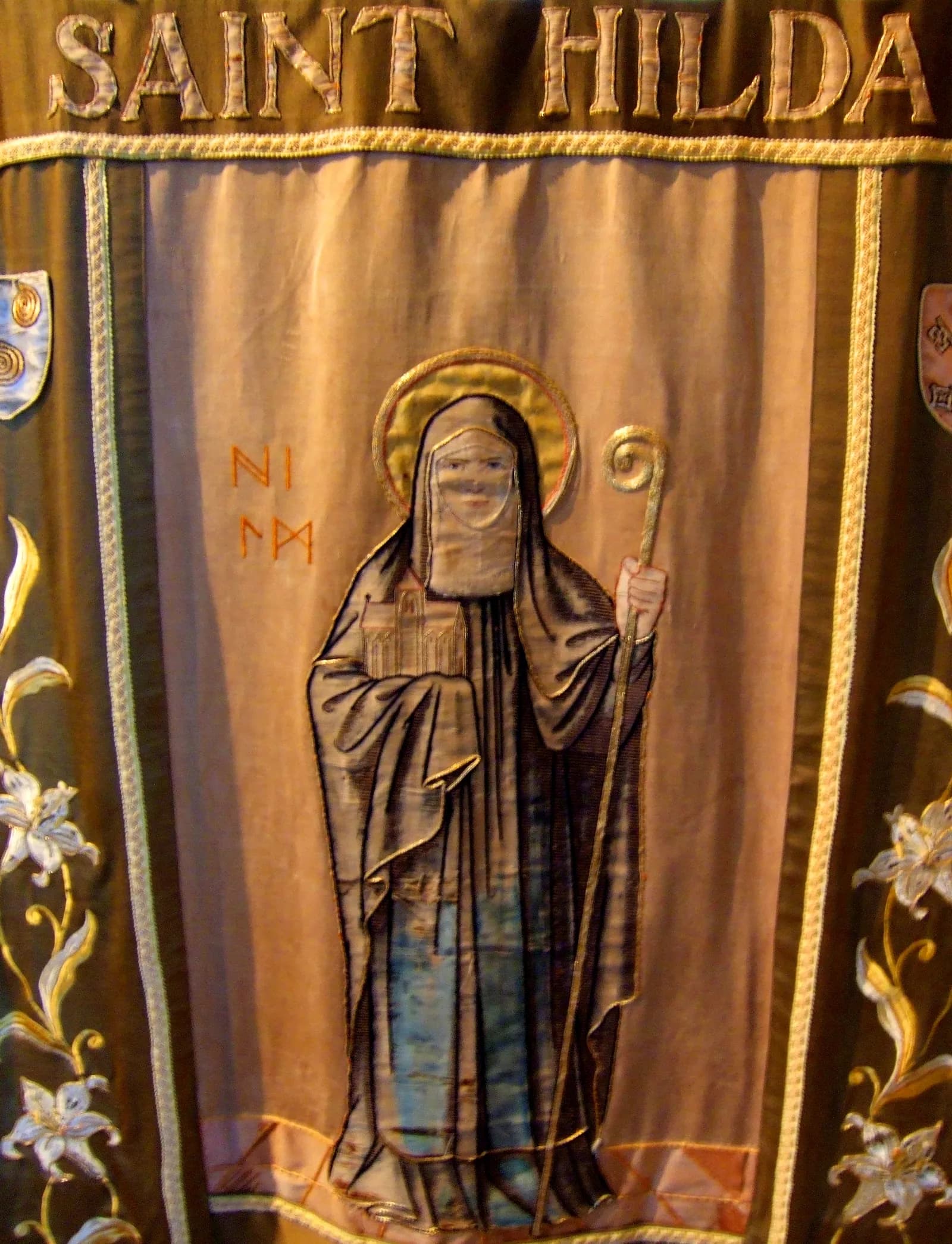
The ship represents more than two centuries of naval history, from her construction in colonial India to her service in the Atlantic and Pacific, and now her preservation in Hartlepool. For the town, HMS Trincomalee anchors a maritime heritage that stretches back to the 7th century Hartlepool Abbey and forward to the waterfront regeneration that transformed the former industrial port into a cultural destination.