The remains of Hartlepool Abbey, founded in 640 CE on the Headland, represent the earliest roots of the modern town. Archaeological work, including a 2000 Time Team excavation, has slowly revealed the story of this lost centre of early Northumbrian Christianity.
The Founding of Hartlepool Abbey
Hartlepool Abbey was established in 640 CE by Hieu, who became its first abbess, with the support of Aidan of Lindisfarne. The monastery stood on what is now known as the Heugh or Old Hartlepool, on the Headland Estate. It was a double monastery, housing both monks and nuns under the authority of a female abbess.
The village that formed around this religious settlement in the 7th century marks the earliest beginnings of Hartlepool as a town. The monastery likely consisted of simple wooden huts within a walled enclosure, surrounding a church. No trace of the original buildings remains visible today.
St Hilda and Hartlepool
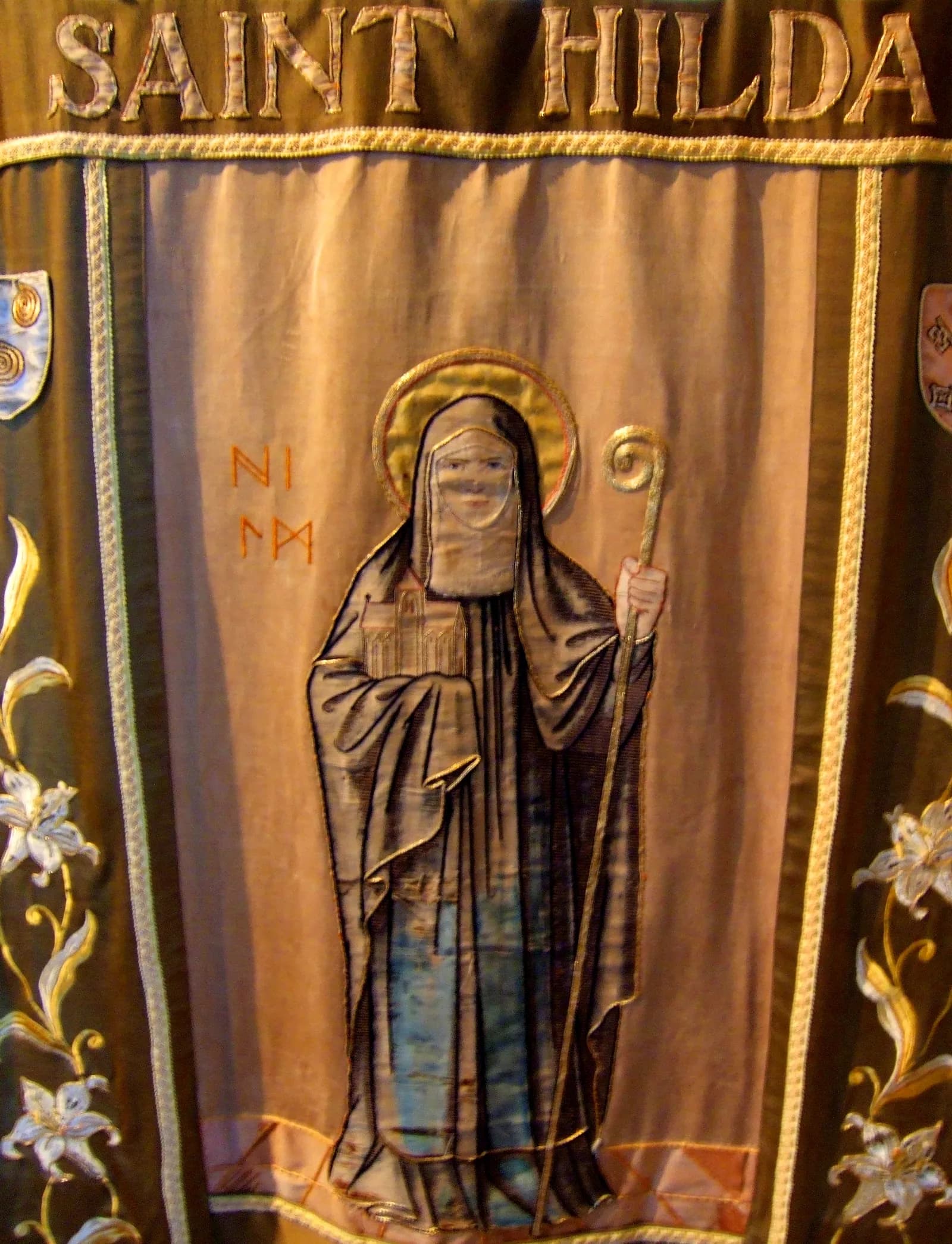
Hilda of Whitby, born around 614 CE into the Deiran royal household, was appointed second abbess of Hartlepool Abbey in 649 CE by Bishop Aidan. She had spent the previous year at a convent on the north bank of the River Wear learning the traditions of Celtic monasticism.
During her time at Hartlepool, Hilda organised the monastery with a structured timetable for prayer, work, and rest. In 655 CE, King Oswiu of Northumbria sent his one-year-old daughter Ælfflæd to stay with Hilda at the abbey to be consecrated to God. Hilda remained at Hartlepool until 657 or 658 CE, when she left to become founding abbess of Whitby Abbey, taking Ælfflæd and ten nuns with her.
The historical record falls silent on Hartlepool Abbey after Hilda's departure. The monastery may have ceased operations, moved to Whitby, or simply declined in importance. It was possibly destroyed by Danish Vikings around 800 CE, or abandoned.
Uncovering the Monastic Cemetery
The monastic cemetery near the present St Hilda's Church is the most extensively explored of all Northumbrian monasteries from the 7th and 8th centuries. Excavations in 1883 uncovered human burials and Anglo-Saxon artefacts at the site.
Archaeologists found multiple female skeletons arranged in two rows, aligned north to south, with heads resting on flat stones and inscribed stones placed above them. Among the namestones discovered were those of Heresuid and Bregesuid, identified as St Hilda's sister and mother, as well as Frigyd, abbess of Hackness, and Hildilid, Eadgyd and Torchtgyd, an abbess and nuns from Barking Abbey. One of these namestones is displayed in St Hilda's Church.
Time Team's 2000 Excavation
The archaeological television programme Time Team featured Hartlepool Abbey in episode 57, titled "Nuns in Northumbria", which aired in March 2000. The team conducted excavations at the site, adding to the body of knowledge about the early medieval settlement.
During the Time Team excavation, researchers found bones and a book clasp. These finds contributed to the ongoing efforts to understand the layout and daily life of the 7th-century monastery. Significant finds continue to emerge from the site.
The Site Today
The present-day St Hilda's Church on the Headland stands on the site of the medieval Hartlepool Abbey. While no visible remains of the original monastery buildings survive, the location remains significant as the birthplace of Hartlepool's settlement and its connection to one of Anglo-Saxon England's most influential religious figures.
The archaeological evidence gathered over more than a century, from the 1883 excavations to the Time Team dig and subsequent work, has established Hartlepool as a key site for understanding early Northumbrian Christianity and monastic life.